In CPG (Consumer Packaged Goods) sales execution, even a small 1–2% gap at the outlet level can cost millions each year. Yet most organizations still struggle to identify where this revenue loss occurs.
Sales reps spend hours preparing for store visits, but often enter those visits without reliable, outlet‑specific insights. As a result, they make high-stakes fulfillment decisions with incomplete information. This directly affects what retailers order, what suppliers deliver to the shelf, and what customers buy.
Why today's sales execution falls short
In CPG sales execution, field sales teams make critical decisions on assortment compliance, replenishment quantities, promotional execution, and order recommendations for every store visit. These decisions directly influence on shelf availability and sales performance.
Sales teams already use many tools to help create orders and plan visits. This is true in both Modern Trade and Traditional Trade channels. However, many of these solutions rely on static business rules, historical averages, predefined thresholds, or simple forecasting logic.
While these approaches offer a useful baseline, they often fail to capture today’s complex and changing retail environment. Analysts rarely account for local demand shifts, seasonality, promotions, competitor activity, and store-level dynamics in a dynamic way.
As a result, sales representatives often override recommendations. They rely on personal experience or make judgment calls. This happens because they do not fully trust the data or the recommendations. This can lead to stockouts, excess inventory, assortment gaps, and missed revenue opportunities.
The issue is not a lack of effort from sales teams. Traditional decision-support systems have a limitation. Many current tools use past data and fixed rules and do not keep learning from real-world outcomes.
This is where AI-driven Suggested Order solutions create value. By applying machine learning to store-level sales, inventory, promotional, and execution data, organizations can generate more accurate, adaptive, and explainable recommendations.
Smarter ordering decisions are the result. Sales teams become more confident. Products are available on shelves more often. Revenue grows in both Modern Trade and Traditional Trade channels.
How revenue is lost in CPG sales execution
The average CPG field sales rep spends up to 40% of pre‑call preparation time manually estimating orders. Too often, these estimates rely on spreadsheets, memory, and gut feeling rather than reliable, real-time outlet‑level data.
This isn’t a productivity issue — it's a revenue issue.
When reps visit a store without outlet insights, they mainly rely on intuition, not data, to make sales decisions. This often leads to suboptimal order quantities, gaps in core assortment, and misaligned SKU mixes.
The result is poor on-shelf availability, hence lost sales. It also leads to decreased customer satisfaction, lower return per visit, and less impactful and less credible retailer conversations. All these ultimately limit both distribution quality and revenue growth.
Preventable revenue leakage
Stockouts cause immediate revenue loss and are the most visible source of revenue leakage in CPG sales execution. Effective stockout reduction is one of the fastest ways to protect topline revenue. They cost the CPG industry billions each year.
Assortment gaps happen when an outlet’s current products do not match what customers want. They appear as:
-
SKUs that were ordered, but are missing from the shelf
-
SKUs that were ordered in the wrong proportions
-
SKUs that were never ordered in the first place
This is where assortment compliance becomes critical. If your golden SKUs are not present in the right outlets, you will quietly lose sales, even when the demand exists.
These gaps are where revenue quietly disappears. When organizations only measure what they sell – not what they should be selling – assortment gaps remain largely invisible.
Reviewing order history, checking stock levels, and preparing recommendations all consume time. As a result, sales reps can spend up to 30-45 minutes preparing for a single visit.
Too much preparation time keeps sales reps from other important work. It reduces time for meaningful conversations and can also weaken relationships with retailers. The result isn’t just lost time, but lost opportunities that directly impact revenue and sales rep productivity.
What is Suggested Order?
Suggested Order by Lingaro is an AI‑driven approach to sales execution. It shifts ordering decisions from averages and intuition to outlet‑level facts. Instead of asking sales reps to figure out the “right” order themselves, it provides visit‑ready recommendations. These recommendations reflect how each outlet actually sells.
Sales teams can shift from reactive ordering to steady, data-driven sales execution without adding workflow complexity.
Fixing revenue loss at outlet level
Stockouts and assortment gaps rarely stem from poor sales rep preparation. More often, they happen because order decisions are not real-time and don’t reflect what each outlet actually needs. Suggested Order provides outlet‑level recommendations that match stock and assortment to how each store sells.
Here is what it changes in practice:
-
Outlet-level recommendations, not averages
Using machine learning and advanced store profiling, predictive models analyze sell‑out patterns, local demand drivers, promotions, and seasonality. The system uses data and AI-generated insights to recommend the right products and quantities for each outlet.
-
Immediate revenue impact and revenue uplift
CPG organizations using Lingaro’s Suggested Order see up to a 20% reduction in underselling. This directly drives revenue uplift while also creating a sustained reduction in stockouts over time.
-
Peer benchmarking and store profiling
The system compares each outlet’s performance against similar stores with comparable profiles (e.g., size, location, shopper mix). When it detects a meaningful performance gap on a product and assortment, it flags the opportunity. This enables reps to take targeted action to close the gap.
-
Ensure assortment compliance and Must Stock List (MSL) checks
The system embeds the Must Stock List (MSL) and assortment rules into its data and AI-driven recommendation logic. This ensures consistent prioritization of core products while still optimizing the total order for maximum impact.
-
Strong support during new product launches
Suggested Order pushes new SKU recommendations to every relevant outlet from day one. This enables a faster and more consistent rollout.
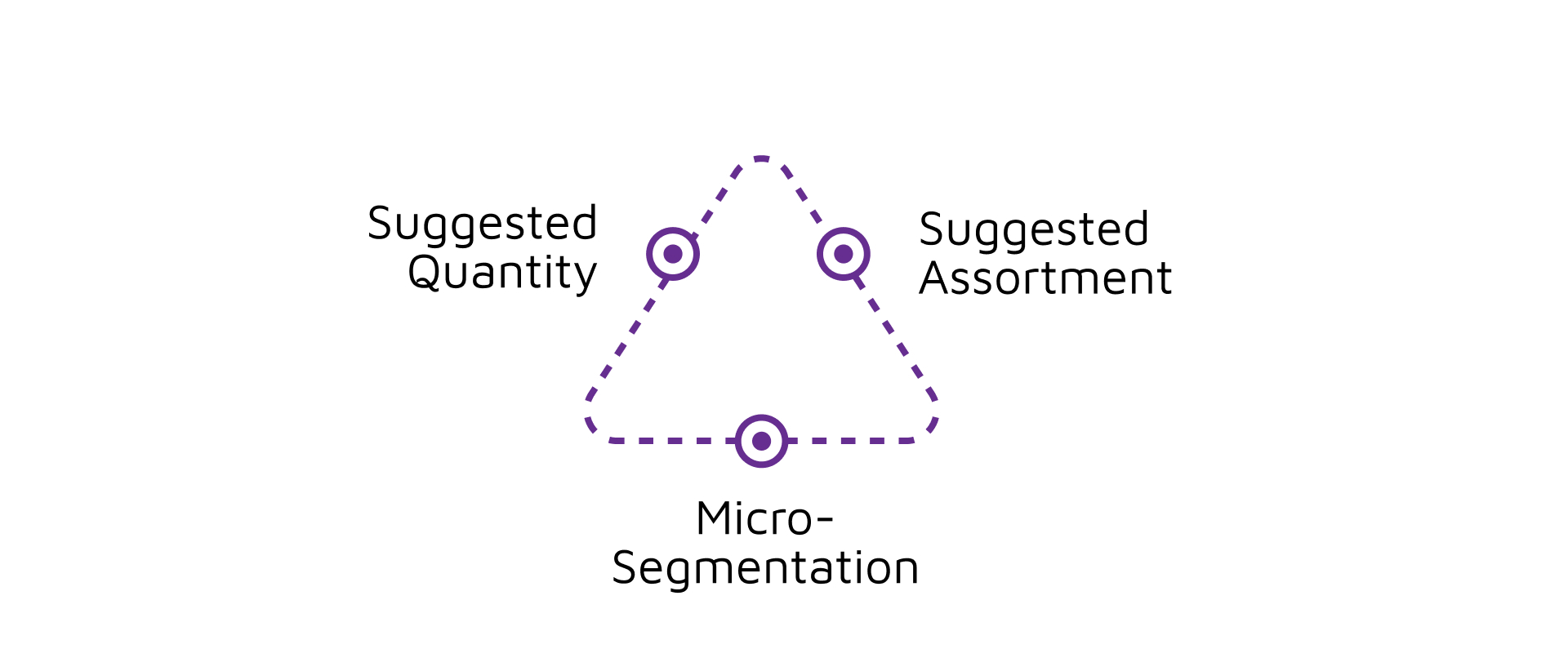 Figure 1: An overview of the Suggested Order solution.
When reps spend much of their day manually preparing orders, they have less time to sell. This means they have less time for strengthening retailer relationships and growing their accounts. AI order planning reduces that burden. With machine learning order planning, reps can make faster, more consistent decisions while still applying local context.
What this looks like in reality:
-
Order optimization across scenarios
AI models assess outlet potential, past order trends, promotions, seasonality, and growth. This guides tailored order recommendations and strategic planning for each outlet.
-
Less preparation time = more selling time
AI powered order planning handles time-consuming prep work. This lets reps focus on revenue-focused work, like making more sales visits and having high-value talks with retailers.
-
Smart allocation of sales effort
The Suggested Order platform shows where effort will have the most impact. It recommends priorities based on outlet potential, not habit or guesswork.
-
Productivity gains without added cost
Implementing Suggested Order achieves improvements without the need to hire more reps or increase promotional spending. By simply making every rep more efficient at every visit, overall productivity increases.
-
Proven financial impact
Organizations using Suggested Order typically see a 2x-6x ROI within 12-24 months of deployment. Successful adoption, higher sales productivity, and better CPG sales execution quality drive this impact.

Figure 2: The Suggested Order dashboard.
Why Databricks matters
One of the biggest risks with legacy shelf forecasting tools is the lack of real-time information. Most systems depend on latent, historical data instead of real‑time OLTP data or data lakes.
In addition, legacy systems can’t share enterprise data from the supply chain, POS, or loyalty programs. It introduces further issues by reusing stale legacy data across use cases.
That is where architecture matters.
Suggested Order runs on the Databricks Data Intelligence Platform. It provides a unified data and AI foundation that runs at the speed of commerce without added complexity.
-
Built for cost-efficient scale
Databricks is optimized for large-scale data and AI workloads. Compared to legacy systems and traditional data warehouses, processing costs drop by up to 50%. The savings grow as the solution scales.
-
Enterprise-ready by design
Lingaro’s Suggested Order is Databricks‑native. You benefit from the full Data Intelligence Platform, now and in the future. This includes serverless data pipelines, near‑instant data latency with Lakebase, agentic decisions powered by AgentBricks, and natural language capabilities through Genie.
-
Real-world proof: scaling Suggested Order globally
The scalability of Suggested Order is proven in practice. Built on Databricks, the solution scaled across 28 markets and more than 300,000 outlets for a global CPG beverage bottler. This delivered a 3.2% uplift in sales volume and a 10× faster rollout, without added cost or complexity.
The balance of scale, speed, and control makes Databricks a strong foundation for long‑term, AI‑driven CPG sales execution.
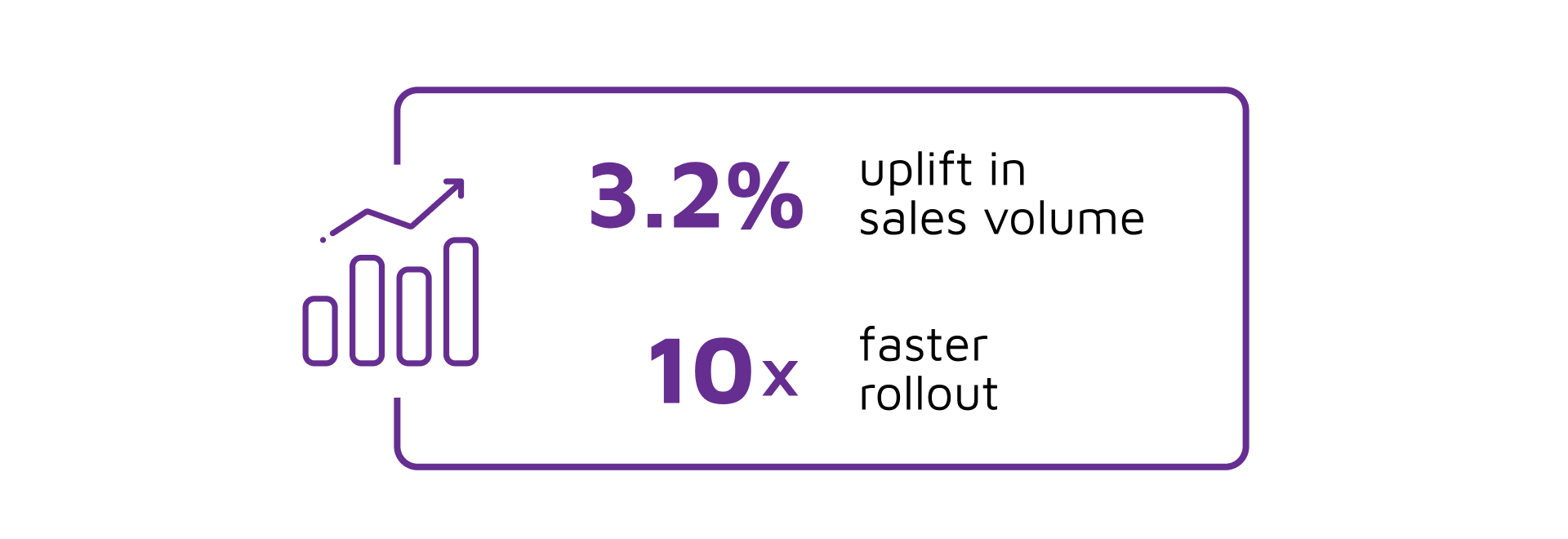 Figure 3: Success metrics from a client using Suggested Order by Lingaro.
A model that improves over time
Most ordering tools rely on historical data and fixed rules that quickly become outdated. In contrast, Suggested Order learns continuously from real outcomes and improves with every sales cycle.
- Learns from real outcomes, not just historical data. The model adapts using actual sell-out data, not just historical averages.
- Improves through feedback. When a rep overrides a recommendation and sell‑out data confirms the choice, the model learns from it. The model then uses this signal to refine future sales decisions.
- Accuracy improves over time. The platform becomes more accurate with continued use.
From hidden losses to real returns
Lack of effort is rarely the cause of revenue loss in CPG sales execution. It happens when teams make everyday CPG field sales decisions without the outlet-level insight they need to get them right.
Suggested Order by Lingaro applies outlet‑level recommendations and AI order planning. This improves assortment compliance, reduces stockouts, and increases sales rep productivity. The result is stronger commercial excellence, with clearer returns and better execution where it matters most.
FAQs
Where does revenue typically leak in CPG sales execution?
Informed decisions made without outlet intelligence drive revenue leaks, resulting in lost sales and slower revenue growth.
Why do sales reps struggle to close larger orders during store visits?
Sales reps struggle with closing deals when limited real-time visibility into outlet needs forces guesswork over predictive analytics.
How do stockouts impact commercial performance?
Stockouts cause immediate lost sales, weaken the bottom line, and prevent brands from capturing demand from potential customers.
What role do assortment gaps play in missed revenue?
Assortment gaps erode revenue by misaligning consumer behavior, even when demand exists for the product or service.
How does manual order preparation affect sales productivity?
Manual preparation creates operational pain points, making it difficult to save time where it matters.
How does Suggested Order improve day‑to‑day sales execution?
Suggested Order improves execution through order optimization, actionable insights, and outlet‑level recommendations that optimize inventory.
Why is outlet‑level insight better than averages for planning?
Outlet‑level insight enables smarter sales strategy and market strategy through data analysis.
How does AI order planning support reps in the field?
AI order planning supports reps with demand planning, improving deal closure, and freeing up time.
What makes the solution scalable for global FMCG organizations?
Scalability comes from using FMCG sales technology built on a Unity Catalog.
How does the model stay accurate over time?
The model continuously improves from outcomes and evolving sales patterns.
How does Suggested Order work with Sales Force Automation (SFA)?
Suggested Order integrates with existing SFA systems, ensuring recommendations fit naturally into field sales workflows without adding complexity.