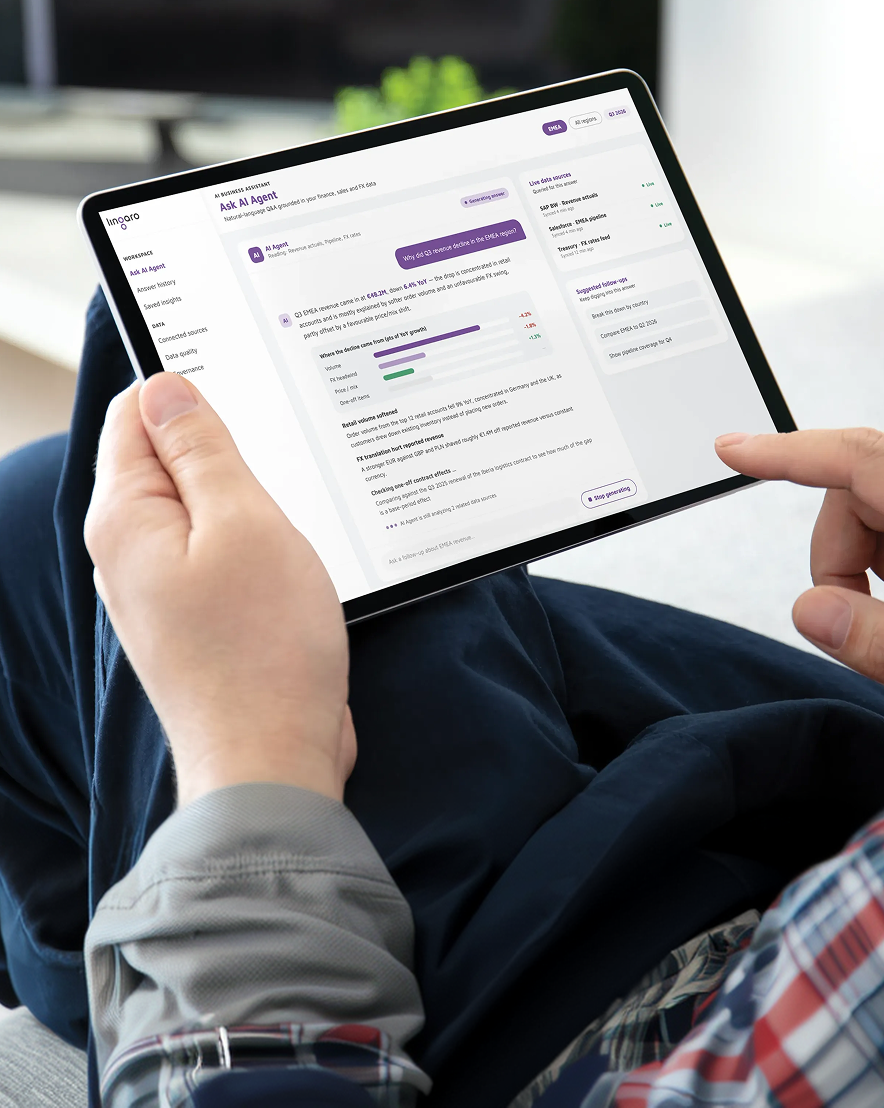
Healthcare professionals need fast access to accurate medical information. But when knowledge is spread across multiple systems, databases, and medical resources, finding reliable answers can be time-consuming.
A leading pharmaceutical company set out to change that by creating a trusted AI experience built on connected medical knowledge.
Client Profile:
The organization wanted to improve access to medical information for healthcare professionals, including product information, contraindications, adverse effects, drug interactions, and reimbursement status.
Challenge:
Medical information was distributed across disconnected sources, making it difficult to provide fast, reliable, and source-grounded answers. The company needed a solution that could connect fragmented knowledge, support regulatory requirements, and reduce the risk of unsupported AI responses.

Solution:
We implemented an Enterprise Context Layer on Microsoft Azure through our Contextual AI Factory, connecting trusted medical sources, business rules, and pharmaceutical relationships into a unified AI-ready foundation. The solution powers an AI Medical Assistant that delivers source-grounded answers with citations, a complete audit trail, and built-in governance controls. It can also surface relevant, compliant product education and promotional content based on the healthcare professional’s query.
Impact:
By transforming fragmented medical knowledge into a connected context layer, the company gave healthcare professionals faster access to trusted information, created new opportunities for compliant, context-aware engagement, and established a scalable foundation for future AI innovation.
Key results:
-
90%+ benchmark accuracy rate across 300+ representative medical questions, with answers matching expected, source-verified content and containing no unsupported statements
-
Answers delivered in approximately 25 seconds
-
24/7 access to trusted medical information
-
Source-grounded, auditable responses with citations and a complete audit trail
-
Designed to cost approximately $0.10 per query, supporting cost-efficient scalability
-
Production-ready AI foundation for future healthcare AI use cases
.png)