Pharma and life sciences leaders agree that artificial intelligence (AI) is a strategic priority. But are they truly AI ready? With $236 billion in revenue at risk by 2030, many blockbuster drugs will lose patent protection. The pressure to find new growth has never been greater.
AI could unlock nearly $350 billion in annual value through faster research and development (R&D), smarter sales, and lower costs. The ambition is there, but the real test is whether the industry can deliver on it. Our latest report, The State of AI Readiness in Pharma, set out to measure exactly that.
What does it mean to be AI ready in pharma?
Being AI ready is not about how many pilots you are running. It is about whether your organization has what it takes to turn experimentation into scaled AI that delivers real business impact. That includes strategy, data, design, delivery, and adoption capabilities.
In pharma and life sciences, that readiness carries extra weight. Clinical, commercial, regulatory, and patient data each live in separate systems, with their own definitions and compliance requirements.
Medical affairs, commercial, market access, and digital teams all need different things from AI. Being AI ready means bridging those divides. That is when AI outputs are trusted and actually used in everyday decisions.
The execution gap in pharma and life sciences
When pharma launches underperform, the culprit is rarely the science. More often, it comes down to disconnected systems, siloed teams, and insights that never reach the people making decisions. For many organizations, closing this gap is fast becoming a source of competitive advantage.
Ready or not, AI is shaping how patients and physicians navigate health choices today. Per the American Medical Association:
Doctors are embracing health AI at pace, with usage up 78% since 2023.
According to recent studies, patients are also following suit.
35% of US consumers are turning to ChatGPT to research health concerns.
The six pillars of AI readiness
The report is based on primary research with 150 senior pharma and life sciences leaders at Reuters Events Pharma 2026 in Barcelona. We aimed to evaluate organizational maturity across six dimensions:
- Strategy – Does your AI strategy have clear owners, priorities, and goals?
- Data – How reliable and connected is your data across core pharma domains?
- Design – Are your AI use cases built around actual roles and workflows?
- Delivery – Can you consistently move AI from pilot to production?
- Adoption – Is AI part of your team's daily workflows and decisions?
- Barriers – What single obstacle is holding your progress back most?
Data stands out as the foundation that holds everything else together. Poor data quality and weak data governance undermine even the most promising AI initiatives.
As Wiktor Fido, EMEA General Manager at Lingaro, told FirstWord Pharma, "If your data isn't ready, you aren't ready for AI."
What the findings reveal
Across all six pillars, the readiness gap is systemic, not isolated. Most organizations have started their AI journey. Few, however, have built what they need to scale beyond experimentation.
A small group has pulled ahead. What sets these leaders apart is how they think about the problem.
Wiktor frames it plainly: "Strategy and design, data readiness, and adoption. Remove any one leg and you get endless pilots. The organizations that scale treat all three as non-negotiable."
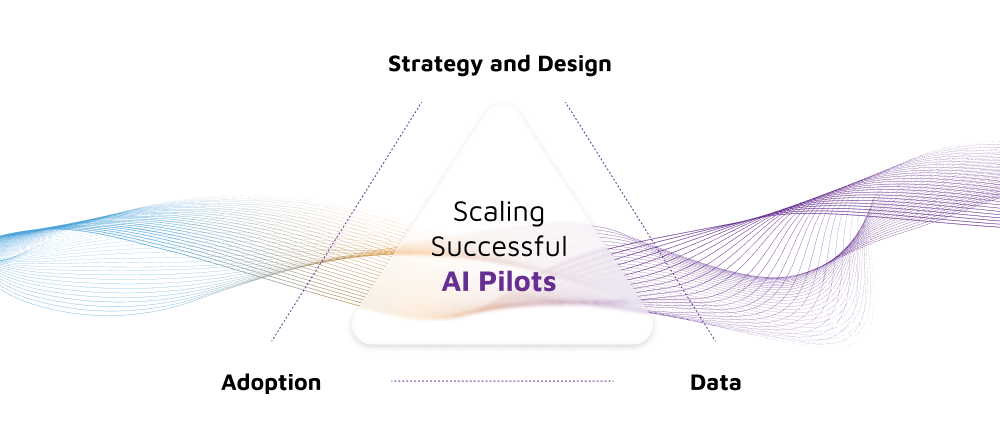
Strong data foundations, disciplined AI adoption, and a data-driven mindset separate long-term AI success from an endless cycle of pilots. As for how to get there? We have kept the specifics in the report for you to discover.
So, are pharma and life sciences AI ready?
The short answer: most are not yet, but the path forward is clear. This report gives you an objective view of where pharma and life sciences truly stand and where to focus next.
Get your copy to explore the complete findings. Benchmark your organization and see how you can turn AI ambition into measurable results.